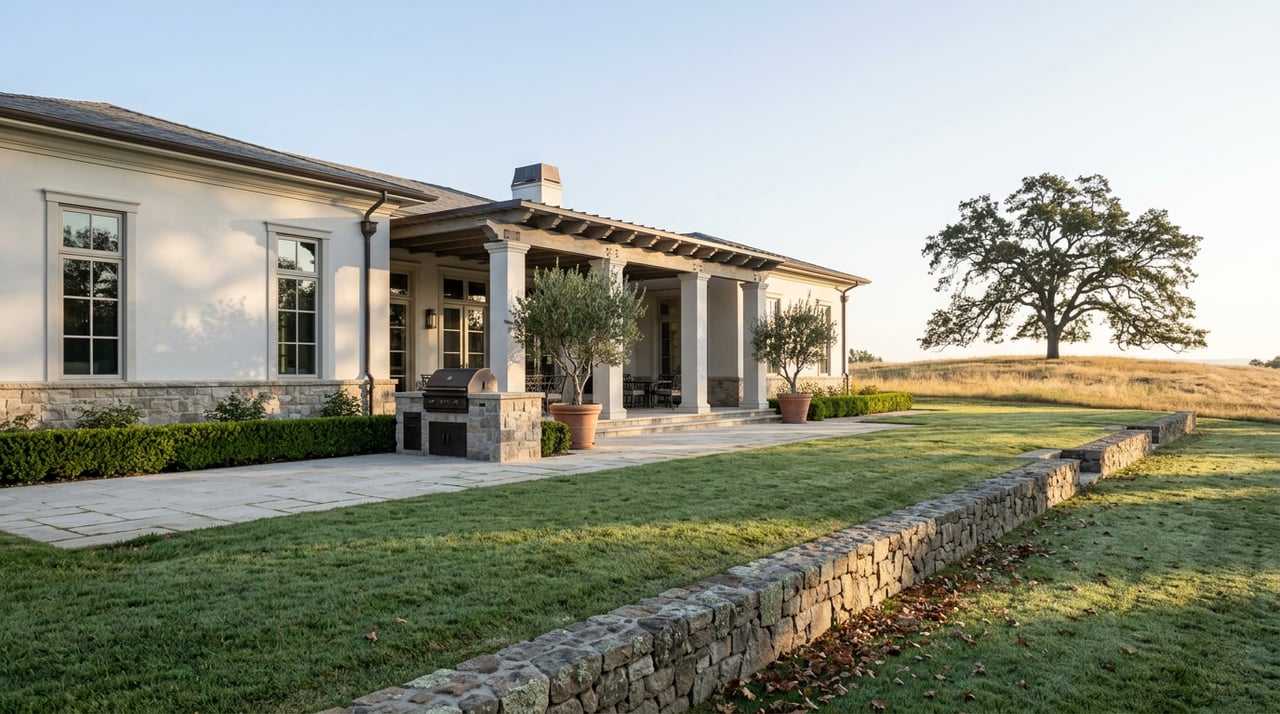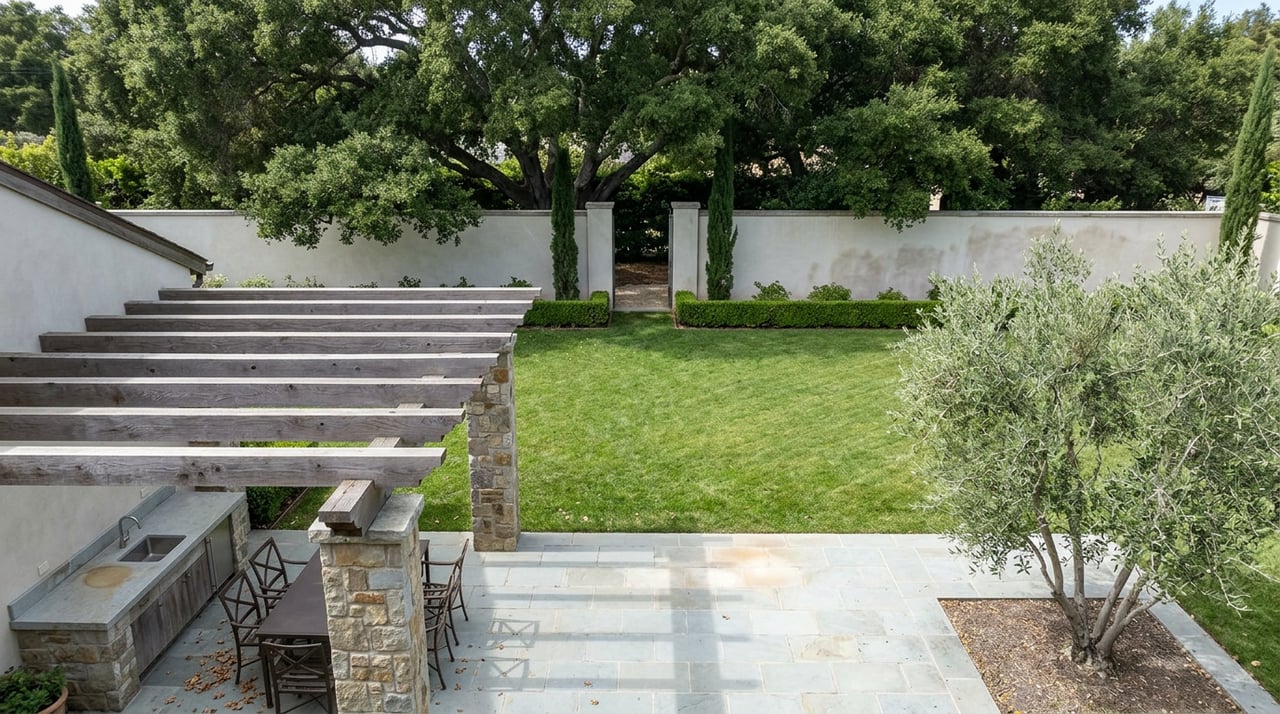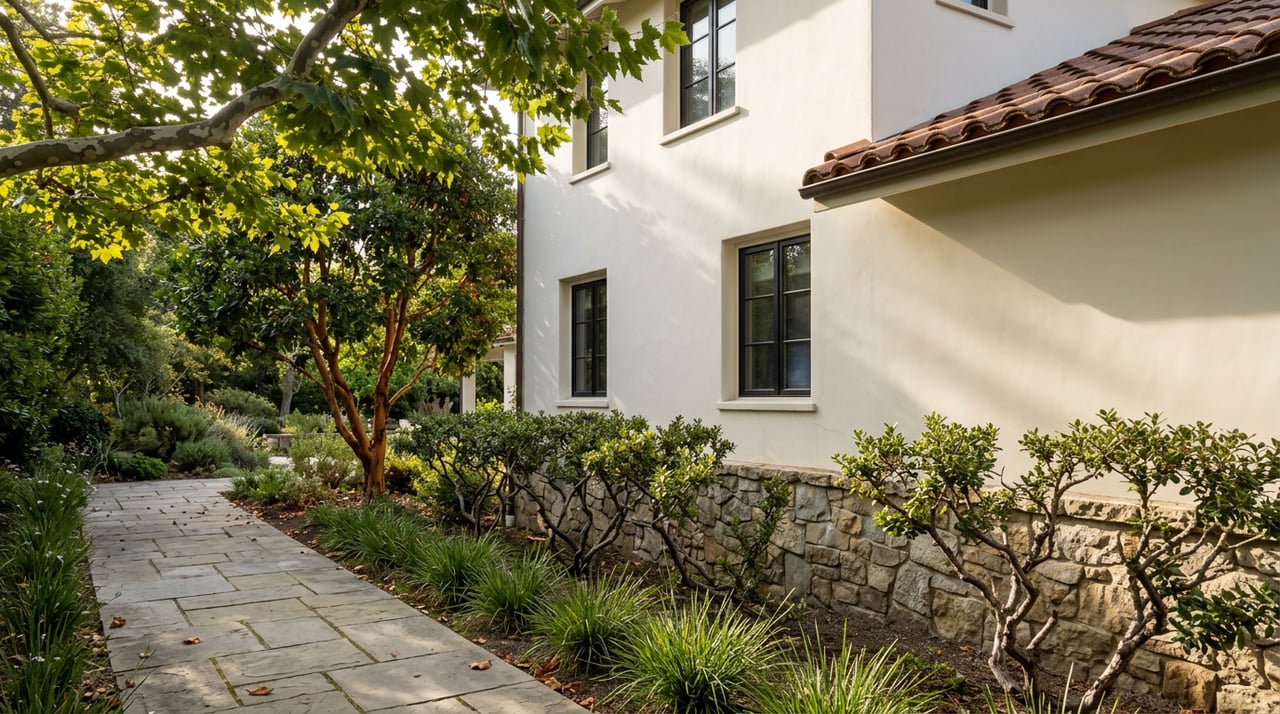
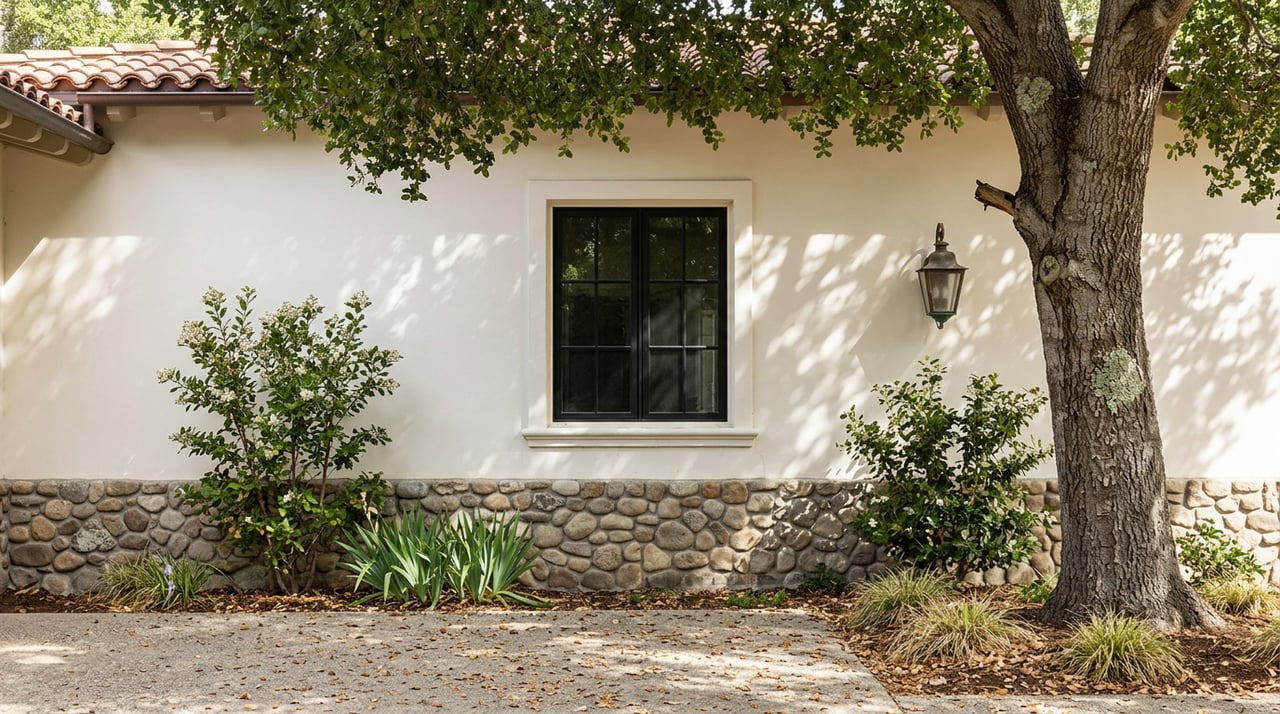
Most Danville listing consultations for a large hillside property include a landscape conversation: trim the front oaks so the elevation photographs cleanly, take down the two crowded specimens along the drive, refresh the beds, and get ahead of defensible space before summer inspection. All of it sounds like ordinary pre-market prep.
For a meaningful share of estate lots east of the freeway, none of it is ordinary. It is regulated, permitted, and appealable, and the ordinance that governs it is written in a way that assumes you asked before you cut. Sellers who discover this on the wrong side of a chainsaw find that the timeline they planned for staging just became a timeline for arborist reports, mitigation planning, and a Planning Department review that runs on its own calendar.
The Line Sellers Cross Without Knowing It
The Town of Danville regulates tree removal under Municipal Code Section 32-79 (Tree Preservation). Two thresholds do most of the work.
A native tree with a single trunk of ten inches or greater in diameter, measured four and a half feet above natural grade, is protected. Multi-trunk trees hit the threshold when the trunks together total twenty inches at the same measurement height. Separately, any single-trunked tree of any species with a trunk diameter of thirty-six inches or greater at four and a half feet above grade qualifies as a Heritage Tree. Multi-trunk trees do not count as heritage.
The species list matters because ten inches is not a large tree. On a Blackhawk or Sycamore Valley lot, dozens of specimens can clear that bar. The Town's protected natives include:
- Blue Oak
- Coast Live Oak
- Valley Oak
- Canyon Live Oak
- California Black Oak
- Interior Live Oak
- White Alder
- California Bay
- California Buckeye
- California Sycamore
- Madrone
- London Plane
The London Plane inclusion trips people up because it reads as an ornamental street tree rather than a native. It is on the list anyway. A mature deodar cedar or a large ornamental that no one thinks of as regulated can also fall under heritage protection the moment it crosses thirty-six inches at breast height, regardless of species.
Why This Shows Up During a Sale, Not Before
A homeowner who lives with a property for fifteen years rarely audits the trunk diameter of the trees in the side yard. The line is crossed by growth, not by planting. By the time a seller is thinking about presentation, several specimens have almost certainly moved into the protected tier.
The permit itself is not the friction. The mitigation is.
Removal of protected trees requires Planning Department approval, an ISA Certified Arborist report, and inch-for-inch replacement mitigation. Replacement trees must total the same number of trunk diameter inches as the removed tree. A thirty-inch heritage oak coming out is thirty inches of new caliper going back in, on a site that has to accommodate them and an owner who has to buy and install them.
That math changes the pre-listing conversation. If a seller wants a clean sightline to a rear terrace and a protected specimen is in the way, the arithmetic is not "remove the tree." It is remove the tree, commission a report, wait on the permit, and plant six or eight new trees against a signed mitigation plan. On a compressed listing schedule, the calendar does not accommodate that sequence. The permit itself takes review time; applications for major projects generally need three to six weeks of processing, and that is before you factor in nursery lead time for larger caliper stock (learn more in our guide to the home inspection process and disclosure realities).
The Fire District on One Side, the Planning Commission on the Other
Danville sits at the wildland-urban interface. Every parcel from Bryan Ranch through Blackhawk, Tassajara Valley, and the Diablo foothills carries defensible space obligations enforced by the San Ramon Valley Fire Protection District, which covers Danville for defensible space requirements.
This is where the ordinance becomes a compliance puzzle instead of a rulebook. The Fire District wants fuel reduced within specified distances of the residence. The Town wants the same oaks preserved. Danville's wildland-urban interface properties in Blackhawk, Tassajara, and Magee Ranch face a genuine tension between fire safety and tree preservation. The San Ramon Valley Fire Protection District wants fuel reduction; the Town's ordinance protects those same oaks (read about insurance and wildfire regulations in our guide on getting California home insurance).
The resolution is not a coin flip. It is a documented arborist assessment that reconciles the two mandates in a single report, prescribing selective limbing, canopy separation, and understory clearing in place of removal wherever the specimen allows it. For sellers, this means a listing at a hillside address is rarely a straightforward "clean up the yard" job. It is a compliance narrative the buyer's inspector will read, and the disclosure package should be built to match it.
What It Actually Costs
The costs are not abstract. In the current market, according to ISA Certified Arborist Michael Schuck, tree removal ranges from $1,000 to $2,500 for small specimens up to $6,000 to $15,000 or more for large heritage oaks on hillside properties in Blackhawk and Diablo Country Club. Protected native tree removals including arborist reports and inch-for-inch replacement requirements typically cost $10,000 to $18,000 or more.
That is one tree. On an estate lot with three or four candidates for removal or major pruning, the exposure clears $50,000 before staging or photography begins. It is the kind of number that has to land in a pre-listing conversation, not in a callback from the arborist two weeks in.
For context on the transaction stakes, the median sale price in Danville sits near $1.8 million, and the 94506 zip code that captures the town's estate hillside inventory averages $2.3 million. On a property in that tier, a $50,000 compliance line item is not a rounding error, but it is far cheaper than a listing that goes on the market with an unresolved tree issue visible on Google Earth and disclosed in the buyer's own inspection (read our guide on how to position an estate property for a premium sale).
The Appeals Record Is the Warning
The Town enforces the ordinance. That is not a hypothetical.
In one well-documented case, Steven and Ann Peltz sought to remove a California sycamore roughly thirty-seven inches in diameter from the front yard of their Love Lane property. The Planning Commission denied the application. The Peltzes appealed to the Town Council, and staff recommended the Council uphold the denial. The reasons the owners cited—including incompatibility with planned landscape redesign, drainage concerns, invasive roots, and safety concerns from falling branches—were the same reasons that come up in a typical pre-listing walkthrough. They did not meet the ordinance's removal criteria.
Older precedent points the same direction. When a Danville couple sought to remove a redwood, the request was denied and the appeal was denied because the redwood was on the town's protected species list at the time. The Town eventually revisited the redwood question, but the pattern held: the Planning Commission does not treat protected trees as landscaping preferences.
A seller reading that history should assume the same standard applies to their property. The ordinance is not a suggestion, and the appeal path is not a workaround.
What This Changes About a Listing Timeline
The practical translation is straightforward. On any large-lot Danville property with mature trees, a site walk with an ISA Certified Arborist belongs at the same stage as the first pricing conversation, not later. The arborist confirms which specimens are protected, which are heritage, which need attention for defensible space, and which can be selectively pruned in place of removal. The output is a plan the seller can price, a permit application the Town can review, and a disclosure package the buyer can read without questions.
For buyers looking at estate inventory in Blackhawk, Tassajara, or along the Diablo Road corridor, the same logic runs in reverse. A property that reads as "needs landscape refresh" may in fact be a property where the current owner has been maintaining a compliance posture for years. Removing a heritage specimen after close because a new pool cabana or a view corridor calls for it will produce the same arborist report, the same mitigation plan, and the same review calendar. Pricing that into the offer, not into the surprise column after close, is the buyer's version of the seller's homework (read our guide to moving to Danville, CA).
Questions That Come Up in Consultations
Does the ordinance apply if the tree is dying or hazardous?
The Planning Department can approve removal for legitimate hazard reasons, but the finding is made on the arborist's documented assessment, not on the homeowner's observation. A tree that looks distressed still requires a permit and an arborist report before it comes down.
What about defensible space clearing required by the Fire District?
Fire-district-driven work still runs through the Town's tree ordinance. The workable path is a single arborist assessment that documents both the fire risk and the tree's protected status, with a work plan the Planning Department can approve. It is a coordination problem, not a jurisdictional exemption.
If a protected tree comes down without a permit, what happens at resale?
The removal is visible from historical aerials, adjacent parcels, and stump evidence. The Town has enforcement authority and mitigation requirements survive the transfer. A seller who took a shortcut a few years ago is disclosing an unresolved compliance issue at close.
Are HOA-approved removals exempt?
An HOA approval covers the HOA's rules. It does not substitute for the Town of Danville's Tree Removal Permit. Both approvals are typically required for protected specimens.
Who do I actually call at the Town?
The Town of Danville Planning Department handles permit applications. That is the front door. The arborist you retain will handle the report and the inch-for-inch replacement plan that the Department reviews.
The ordinance is not the enemy of a sale. It is a set of facts about the property that belong in the marketing plan and the disclosure package from the start. A seller who treats it that way lists cleanly, closes on schedule, and hands the buyer a story about stewardship rather than a set of unanswered questions. A seller who treats it as a landscaping detail discovers it during the inspection, and the calendar does not care.
If you own a large-lot property in Danville or are preparing to purchase one, a pre-market walkthrough that includes the tree ordinance in the same conversation as pricing, staging, and marketing is the difference between a compliant timeline and a compromised one. East Bay real estate specialist Jill Fusari works with sellers and buyers across Alamo, Danville, and the surrounding East Bay estate market to build listing plans that account for the specific compliance realities of each property. Curious what your Danville home is worth or exploring Danville homes for sale or Danville townhomes? Contact Jill Fusari today to request a confidential home valuation and start the conversation before the ordinance starts it for you.
Related Blog Posts
- Living Near Downtown Danville: Everyday Convenience and Charm
- The Cedar Shake Roofs in Bryan Ranch and White Gate Just Became an Insurance Problem, Not an HOA One
- Everything You Need to Know About Moving to Danville, CA
- Getting California Home Insurance: Key Considerations
- How to Position Your Alamo Estate for a Premium Sale