If you search Diablo on any major portal, you'll find a median list price of $5.87M and an average of 52 days on market. Pull the sale data for the same community and you get a median sale price closer to $3.5M, with competitive-market indicators suggesting the homes that actually move are closing in roughly 15 days. Three figures, one ZIP code, a gap wide enough to drive through.
That gap is not a data error. It is the market's structure made visible. Diablo records approximately 26 residential transactions per year across a community of roughly 900 residents. At any given moment there may be five active listings. In a market that thin, a single overlisted estate can pull the average DOM above 50 while three well-priced properties close in two weeks. The median is not misleading you on purpose. It just has nothing useful to say.
Metric | Figure | Period |
|---|---|---|
Median list price | $5.87M | 2026 |
Median sale price | ~$3.5M | Recent Benchmark |
Avg. days on market (listed inventory) | 52–54 days | 2026 |
Pace of competitive listings | ~15 days | Current |
Estimated annual transactions | ~26 | Past 12 months |
Active listings | ~5 | 2026 |
What the number on the portal can't show you is where a specific property sits inside a community that operates as several distinct sub-markets layered on top of each other.
The 15-Day Homes and the 50-Day Homes
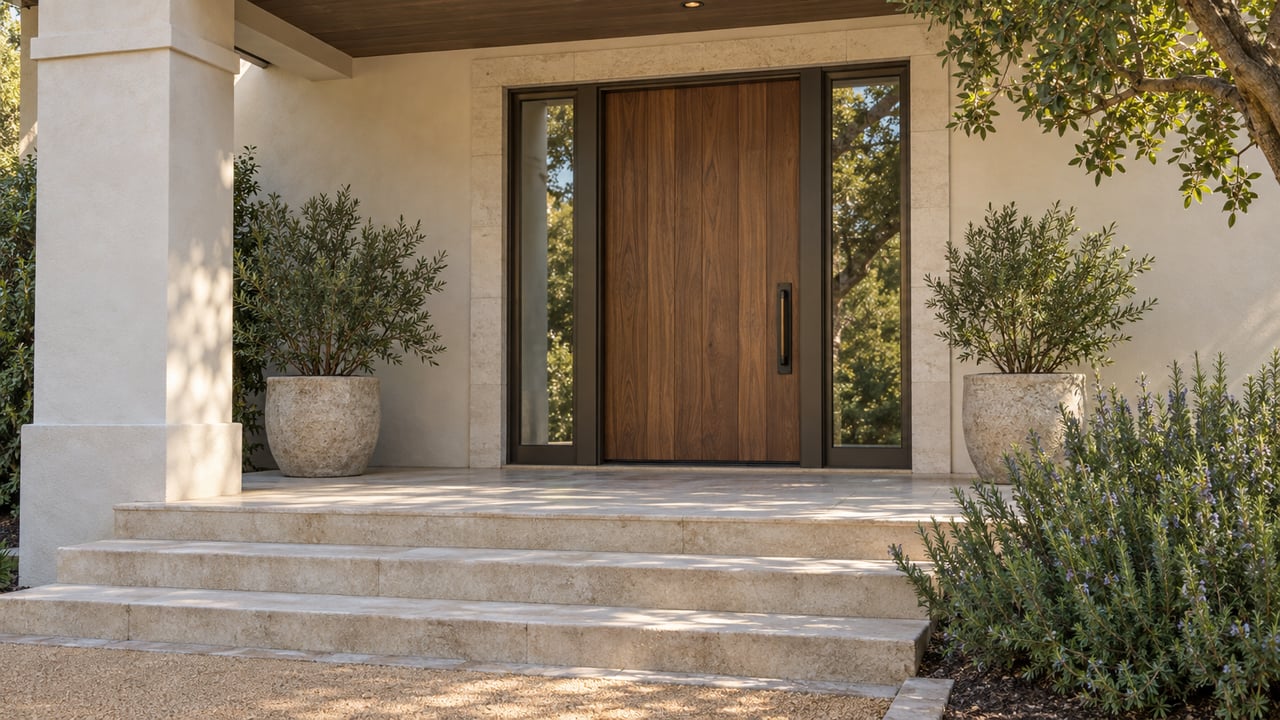
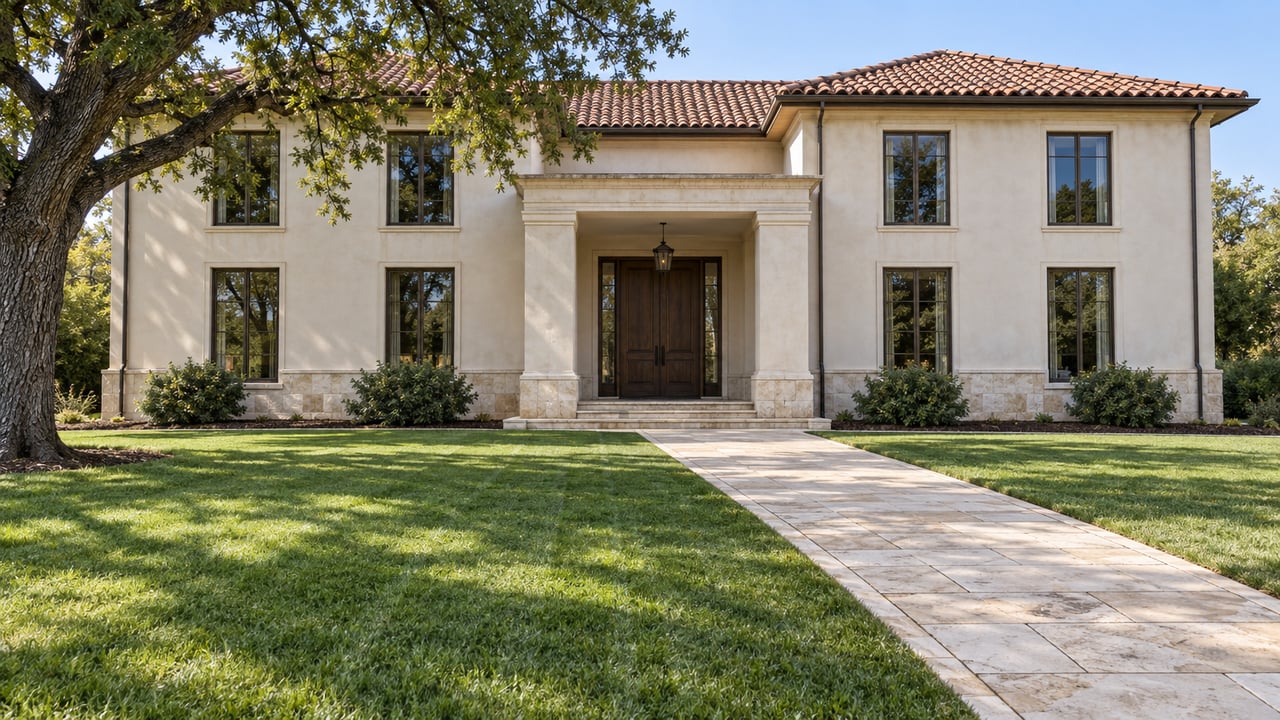
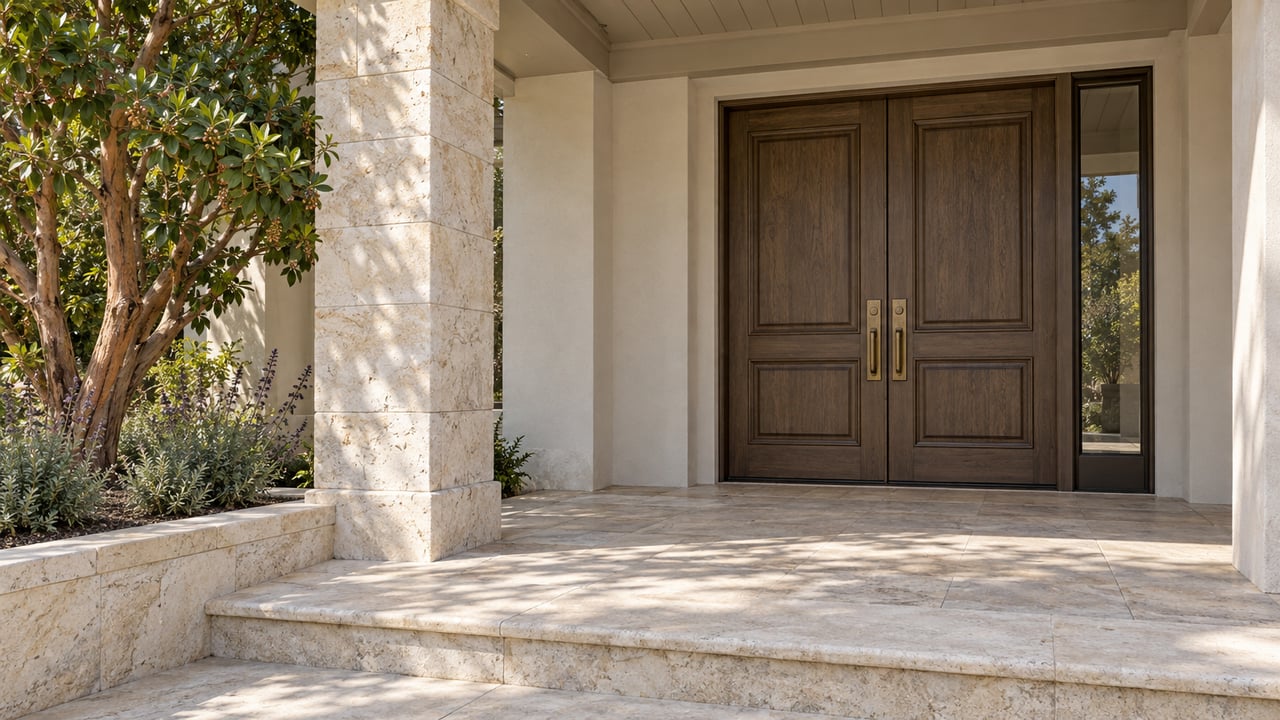
The homes that sell quickly in Diablo share a profile. They sit in lower Diablo, close to Diablo Country Club, on flat or gently graded lots. They are updated or recently built. They are priced from closed comparables rather than from the aspirational end of the list-price range. Agents who know the market well describe Alameda Diablo as one of the most coveted streets in the community, and the active listings there reflect that — a newer 6,141-square-foot estate on a level 0.64-acre lot in lower Diablo, for instance, is positioned differently than a half-acre interior parcel surrounded by mature trees (explore what a Diablo address actually buys you—and what it doesn't).
The homes that accumulate days on market tell the opposite story. They are often priced off the few transactions that happened at peak, without accounting for how much the composition of any given year's sales can distort a thin-market median. When only 26 homes change hands annually, two or three estate-scale sales in one year and none the next can swing the reported median by hundreds of thousands of dollars. A seller who prices off a peak median without understanding which specific properties drove that number is not pricing from data. They are pricing from noise.
For a buyer, the practical implication is this: the asking price you see in Diablo is much less predictive of the sale price than in a market where comparable data is deep. You are reading a thin signal.
What "Lower Diablo" Signals in a Listing
Diablo's internal geography is not published anywhere official, but it shapes pricing consistently. "Lower Diablo" refers to the portion of the community closest to Diablo Country Club's fairways, with flatter terrain and the most direct access to the club's grounds. Listings that use this language are positioning intentionally — it reads differently to a buyer who knows the community than to one who doesn't.
The fairway-adjacent tier is its own sub-market within that. A property set along the 18th fairway of Diablo Country Club, on approximately 1.54 acres and built in 1916, is not comparable to a newer custom estate set back from the course on an interior cul-de-sac, even if both are in "lower Diablo" and carry similar square footage. The historic properties along the fairways carry a premium that square footage alone does not explain.
Elevated parcels in Diablo offer something different: views of Mount Diablo and the surrounding valley, more acreage per dollar, and a sense of distance from the club's social activity (read about the wilderness that starts at the end of your street). Active vacant lot listings in the elevated sections include 5-acre parcels with 360-degree views and schematic home plans already drawn. These attract buyers who want estate-scale land and privacy over walkability to the club. They are a different buyer for a different reason, and the price-per-square-foot comparison between the two zones is not useful.
If a listing doesn't specify where within Diablo it sits, that absence is worth asking about.
The DCSD Layer Every Buyer Misses
Diablo is an unincorporated community. It does not have a city government. What it has instead is the Diablo Community Services District (DCSD), a California Independent Special District formed in 1969 that functions as the community's infrastructure and security layer (read our deep dive on why Diablo doesn't have a city hall, but has a newsletter).
The DCSD funds itself in part through Measure B, a voter-approved special parcel tax. For improved parcels, the annual tax is indexed for inflation. Unimproved parcels pay a lower baseline, while Diablo Country Club pays a set entity rate. This tax appears on your property tax bill, not in the listing price or HOA disclosure.
What does it fund? Three things a buyer should know before closing:
- Security: The DCSD contracts with the Contra Costa County Sheriff's Department for a dedicated deputy assigned 40 hours per week to Diablo, with additional overtime hours budgeted for summer months and the holiday period. The community also operates a Flock license plate camera system.
- Road and infrastructure maintenance: The DCSD maintains the roads, culverts, and bridges within Diablo's boundaries. This is a meaningful responsibility in a community where private lanes run through heavily treed, hilly terrain.
- Kay's Trail: The DCSD maintains the equestrian and pedestrian path running between Alameda Diablo and Mount Diablo Scenic Boulevard. This trail does not appear on any standard listing sheet, but it is a direct amenity for residents in the northern part of the community.
One additional infrastructure note that matters to anyone buying right now: EBMUD and the DCSD manage ongoing water main replacement projects across local streets, including Caballo Ranchero Drive, Alameda Diablo, Avenida Nueva, Calle Arroyo, Calle Los Callados, Club House Road, Diablo Road, El Centro, La Cadena, Lower El Nido, and Ranchitos del Sol. Active utility work remains part of the neighborhood condition.
Country Club Membership, Clarified
Membership in Diablo Country Club is not a condition of purchase. You can own property in Diablo and never join the club. This distinction matters financially because club membership carries its own cost structure, separate from the purchase price and the DCSD parcel tax, and the two are frequently conflated in how people describe the community (read our guide on what country club living in Diablo really looks like).
What is true is that Diablo has no commercial uses at all. There are no restaurants, no grocery stores, no cafes inside the community's boundaries. Every meal out, every errand, every social venue outside the club requires a short drive to Danville or Walnut Creek. For buyers accustomed to neighborhoods where daily life operates partially on foot or bike, this is a structural reality of the address, not an inconvenience that varies by preference.
The club itself describes its model as boutique — a private escape with personalized service built around golf, social events, and dining on-site. For residents who join, it serves as the community's primary gathering infrastructure. For those who don't, the social fabric of the neighborhood is quieter and more self-contained.
Neither choice is wrong. But understanding which one you're making before you close is different from figuring it out six months after you move in.
Frequently Asked Questions
Does the DCSD parcel tax apply to every property in Diablo?
- Yes. Measure B applies to all parcels within the DCSD boundary. It appears as a line item on the Contra Costa County property tax bill, not in HOA disclosures, because Diablo does not have a conventional HOA structure.
Is the Diablo Country Club membership required for residents?
- No. Residency and membership are entirely separate. The club is privately operated and issues its own memberships independently of the real estate transaction. Buyers interested in membership should contact the club directly and treat the cost as a separate financial commitment.
What is Kay's Trail and where does it run?
- Kay's Trail is the equestrian and pedestrian path maintained by the DCSD between Alameda Diablo and Mount Diablo Scenic Boulevard. It connects the residential core of the community to the base of Mount Diablo State Park terrain on the northern edge.
Diablo is a market where the transaction details, the governance structure, and the internal geography carry more weight than the median. If you are evaluating a property here, exploring Diablo CA homes for sale, or curious what your Diablo home is worth in today's market, the conversation worth having is about which tier of the market your target home actually belongs to.
East Bay real estate specialist Jill Fusari has represented buyers and sellers in Diablo and the broader East Bay luxury market for decades. To discuss a specific property or request a confidential home valuation, contact Jill Fusari today to get started.